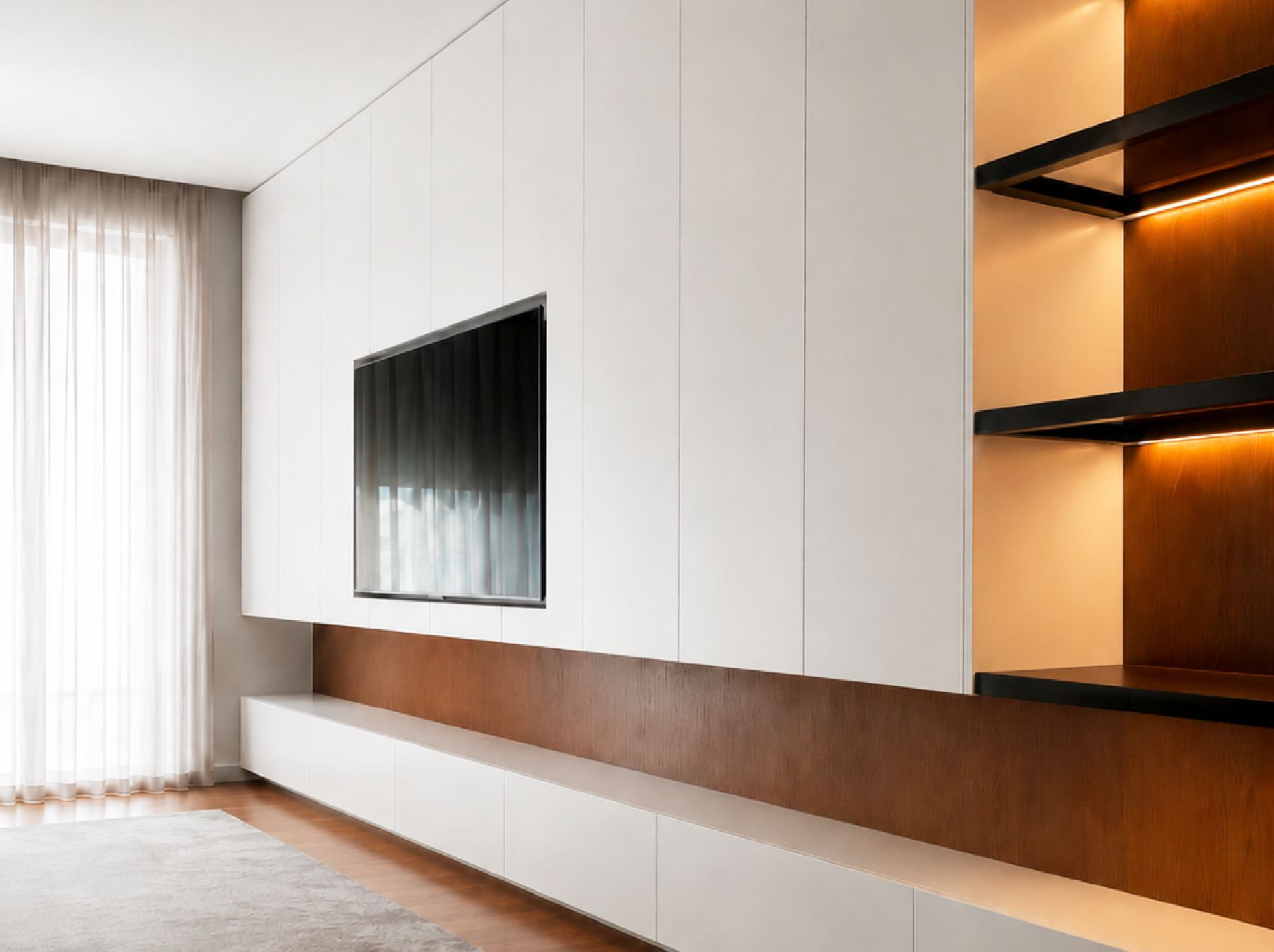
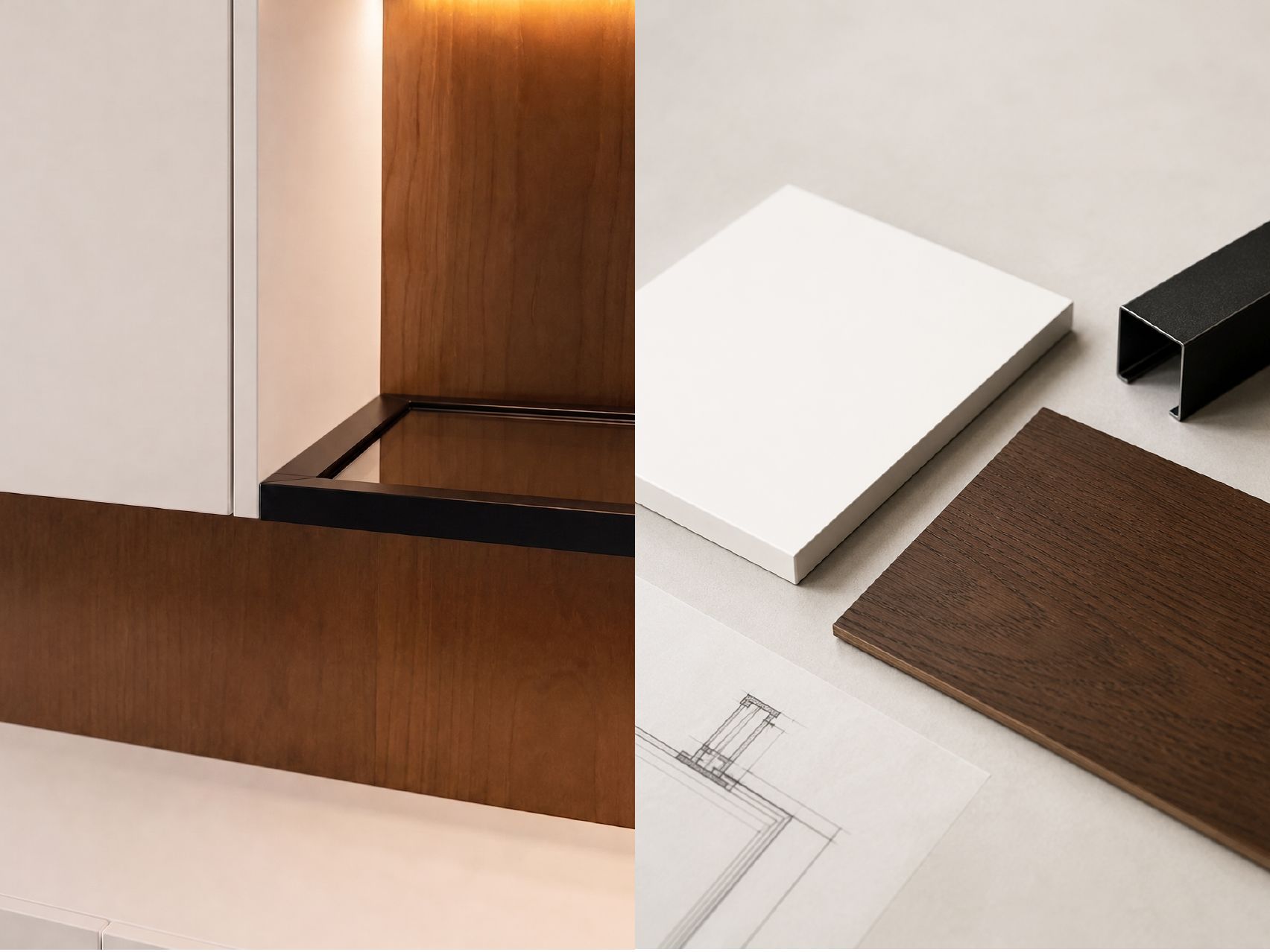
Some details look deceptively simple once they are complete.



August 6, 2026
Some details look deceptively simple once they are complete.
Aseamless transition between two materials, a line of light thatdisappears into the architecture, a piece of joinery that feelsentirely integrated into the wall. When everything is right, the eyebarely registers the complexity required to make it happen. But a good detail israrely accidental. And it should never be left to be solved only onceconstruction is underway. Behind every precisefinish there is drawing, anticipation and a very clear understandingof how each element will actually be built. Thicknesses, junctions,tolerances, transitions between materials, installation sequences andthe relationship between different trades all need to be .Everything that should feel effortless in the final result must firstbe resolved with rigour.
To me, this is anessential part of interior design. A creative vision does not endwith the selection of materials or the image of a space. It needs tomake its way through the entire process and reach execution withoutlosing its original intention. This is wheretechnical drawing becomes so important. Not simply as a set ofdocuments that accompanies a project, but as the tool that transformsan idea into something precise, clear and buildable fo thoseresponsible for making it real. The better resolvedthe detail, the less room there is for interpretation, improvisationor decisions made too late. And this does not mean limiting theknowledge or autonomy of the construction teams. Quite the opposite.It means creating a clear common ground, where designer, contractor,carpenter, metalworker, stonemason and installer can all work towardsthe same intention.
A well-drawn projectshould make execution easier. It should answerquestions before they arise. It should identify critical points. Itshould make visible everything that may look simple in a conceptualimage but, on , depends on exact dimensions, coordination specific decisions. This is also why wevalue the relationship with those who build so highly. The bestresults come from mutual respect for each person’s expertise andfrom a genuine ability to create dialogue between design and execution. Some details evolve onsite because the knowledge of a skilled artisan leads to an evenbetter solution. Some materials require adjustment. Real conditionsmay demand that a drawing be reconsidered. Precision does not meanpretending that nothing changes. It means understanding what mustnever be lost when adaptation becomes necessary.
In the end, what weare looking for is very simple: that the original intention survivesthe construction process. That marble meetstimber exactly where it should. That light appears without revealingthe technology behind it. That a bespoke piece feels as though it hasalways belonged to the architecture. That every transition is socarefully resolved it no longer needs to call attention to itself.
Because an exceptionalfinish does not begin on the final day of construction. It begins muchearlier, when someone decides to think the detail all the waythrough.